


Why Most Business Websites Look Good but Still Fail to Convert
Your website looks stunning, but is it converting visitors into leads? Learn the critical design, UX, and technical SEO mistakes that silently hurt your business's revenue and trust.
Blog
Technical articles, build notes, and practical insights around full-stack development, WordPress, React, automation, SEO, ecommerce, and AI-powered tools.
Search & browse
Search by service, platform, business problem, or technical goal, then browse the articles that match best.
Smart search engine
Search by problem, service, technology, or business goal. The system uses custom TypeScript logic and hidden content metadata to explain why an article matched.
25 results
Try searches like
Archive
Technical notes across full-stack development, WordPress, React, automation, ecommerce, content systems, and case-study thinking.
Your website looks stunning, but is it converting visitors into leads? Learn the critical design, UX, and technical SEO mistakes that silently hurt your business's revenue and trust.
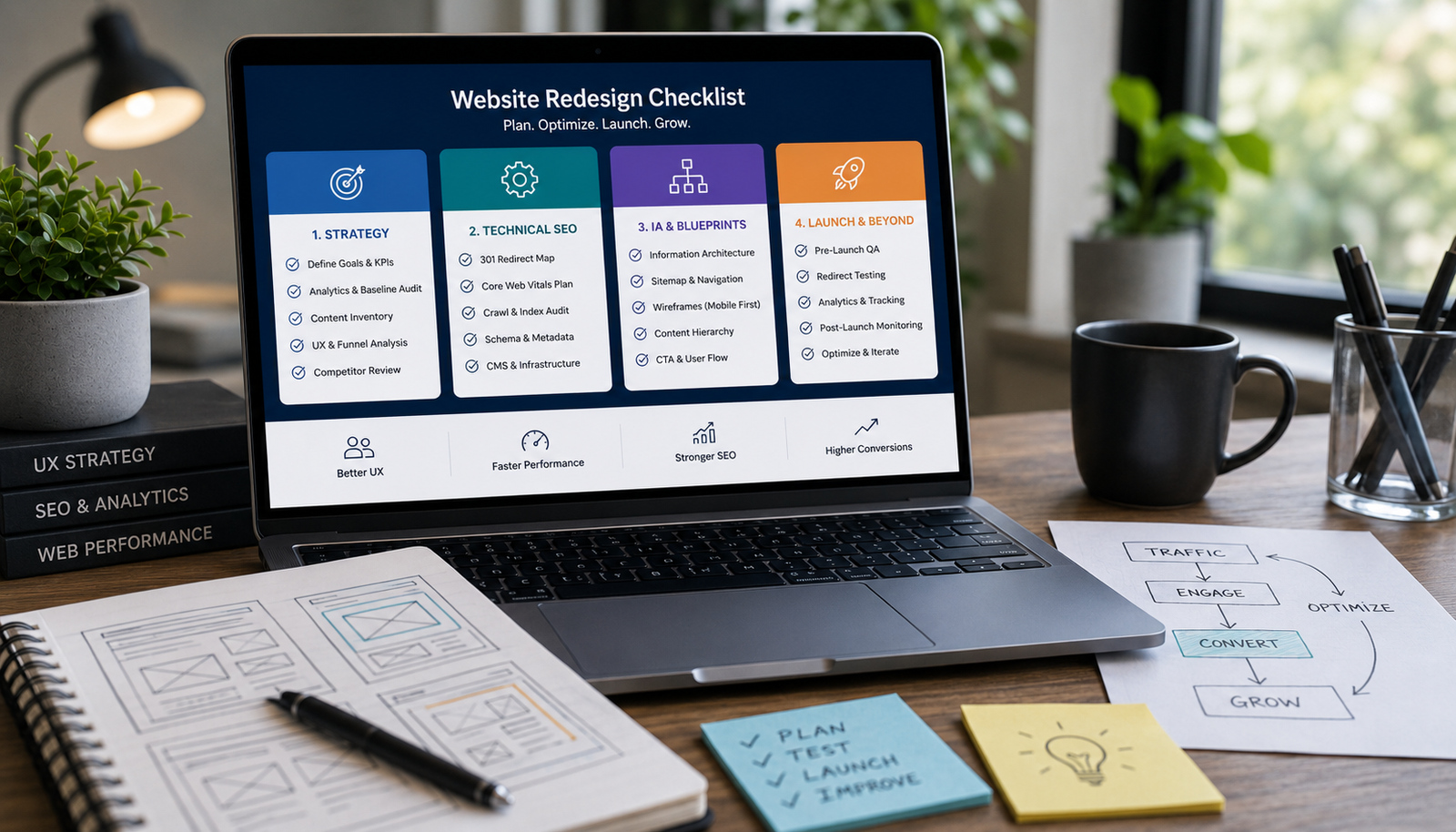
Avoid costly, risky redesigns. Use this essential 4-phase checklist covering strategic content audits, technical SEO migration, performance benchmarking, and wireframing before touching the UI.

Learn the practical steps to design a service website that looks high-end and trustworthy. Focus on strategic whitespace, clear messaging, structured layout, and conversion-focused trust signals.
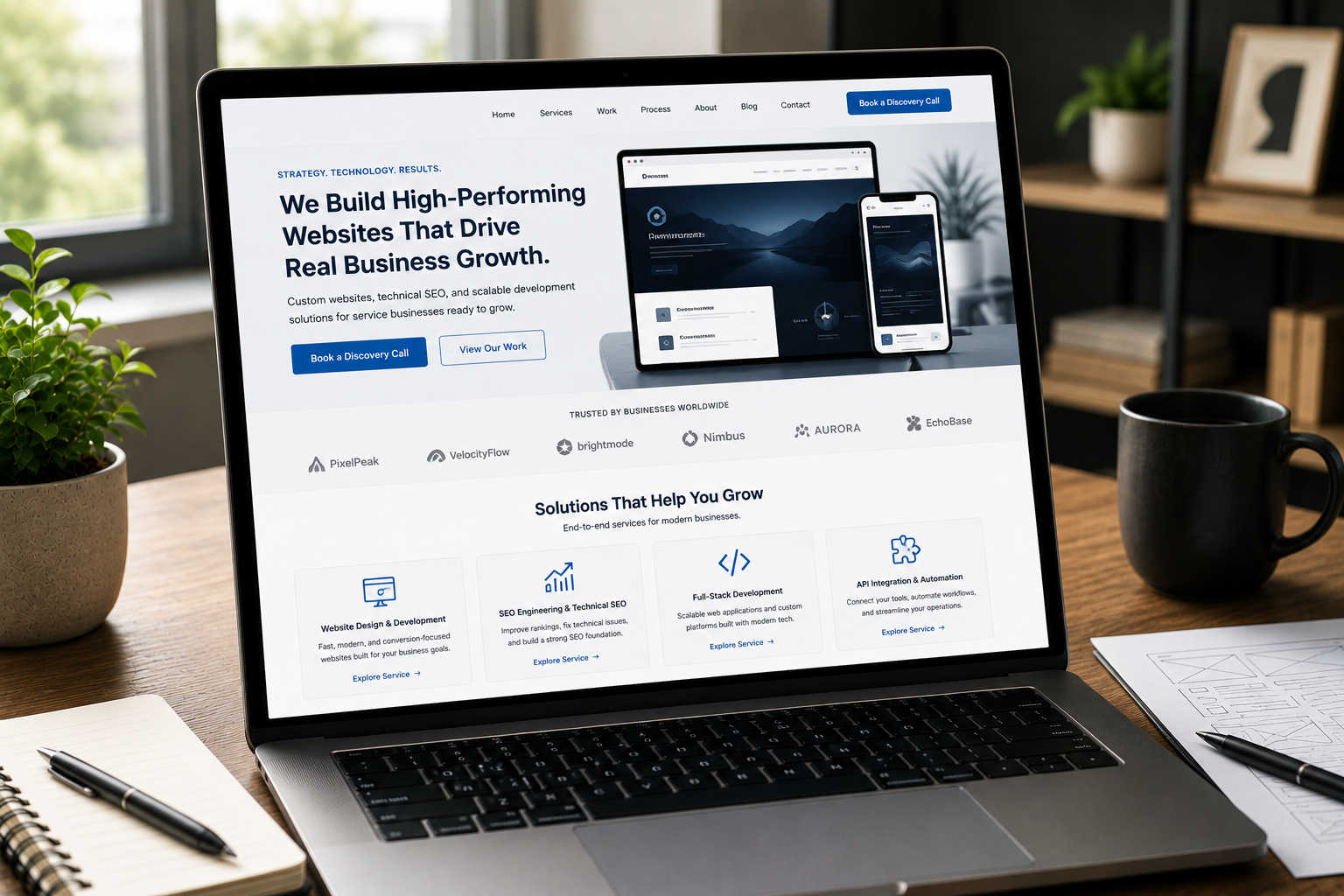
Discover the essential sections—from the Hero to the final CTA—that maximize conversions on a service business homepage and establish instant authority and clarity.
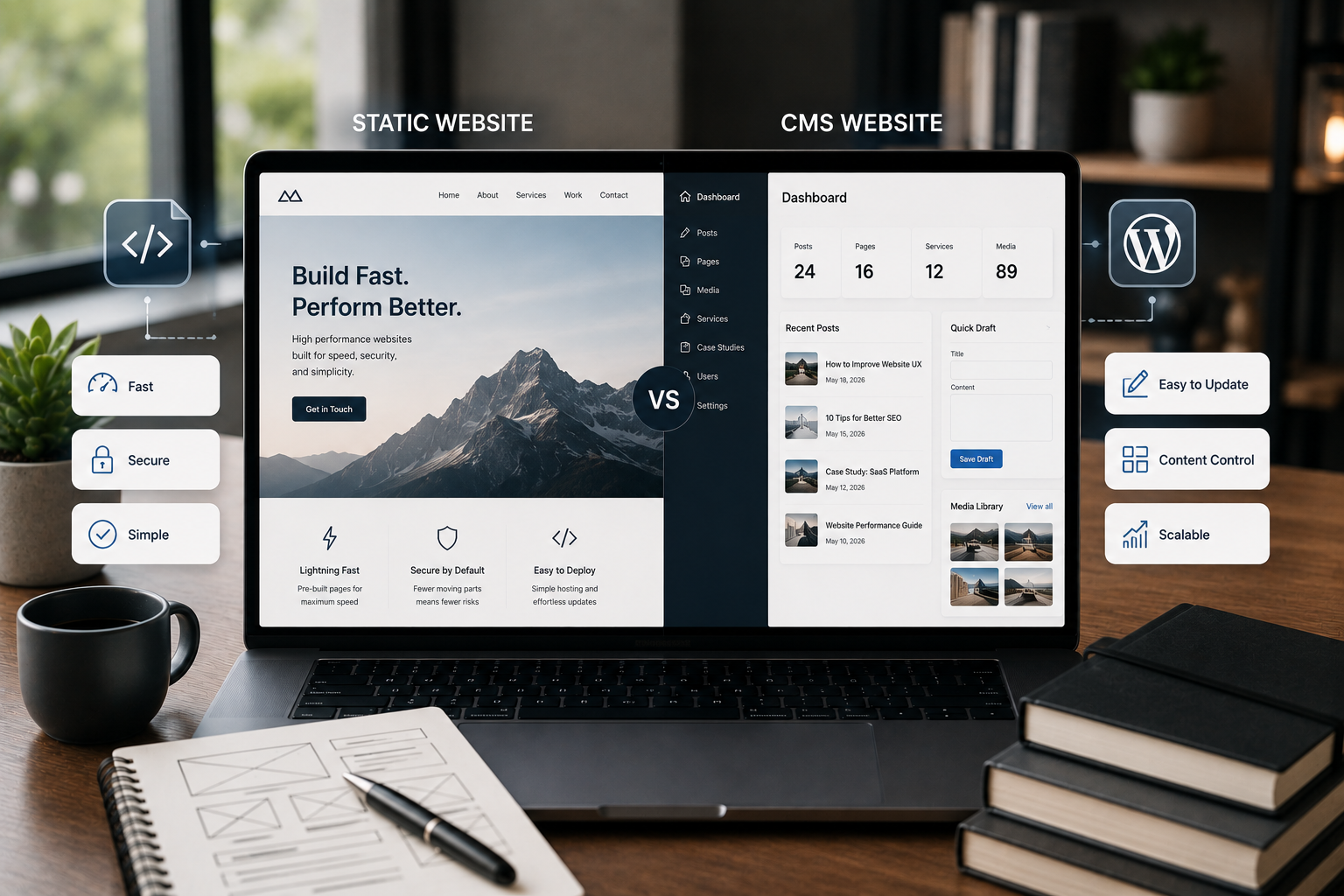
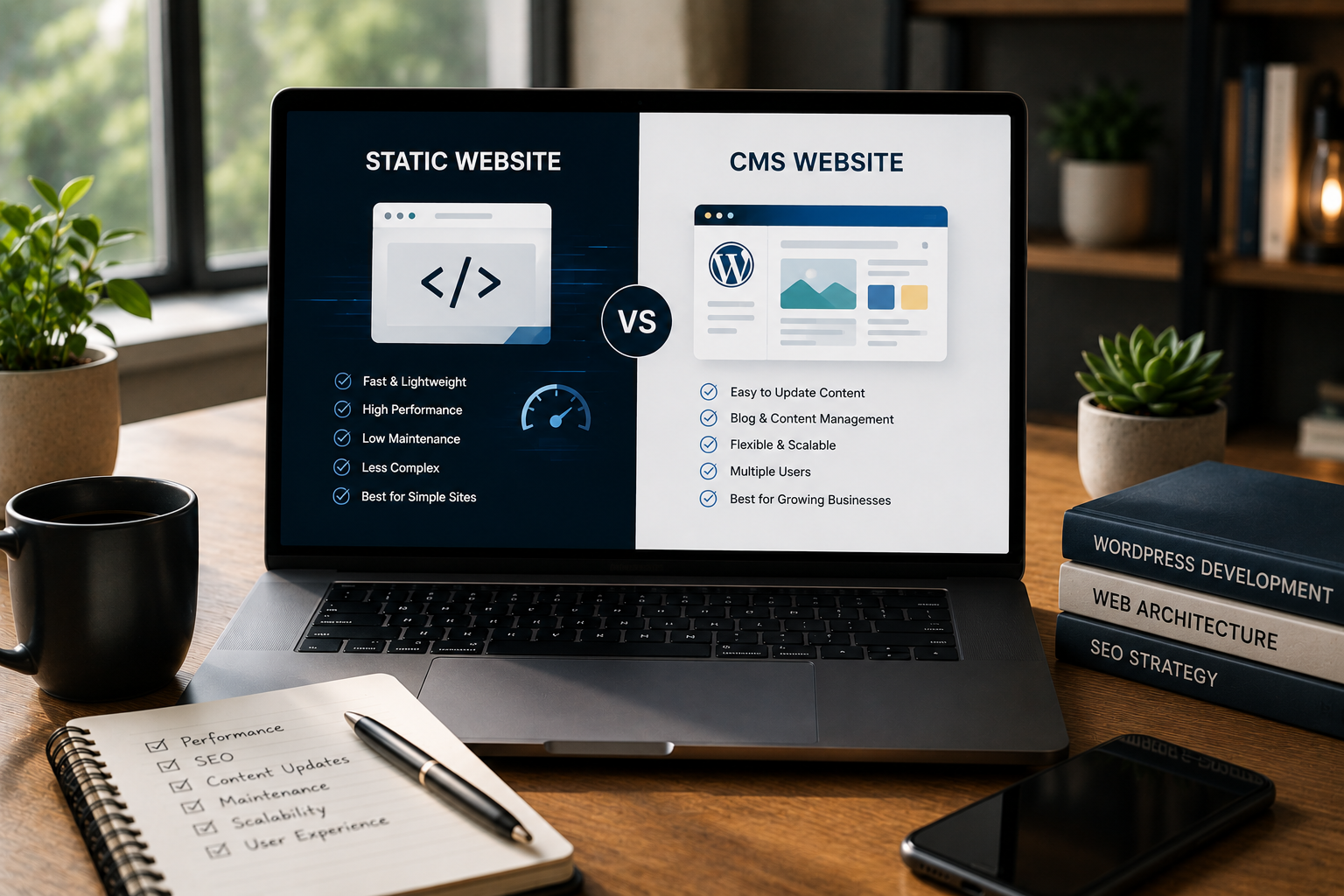
Compare static websites and CMS websites across speed, editing, SEO, maintenance, cost, security, and long-term business flexibility.
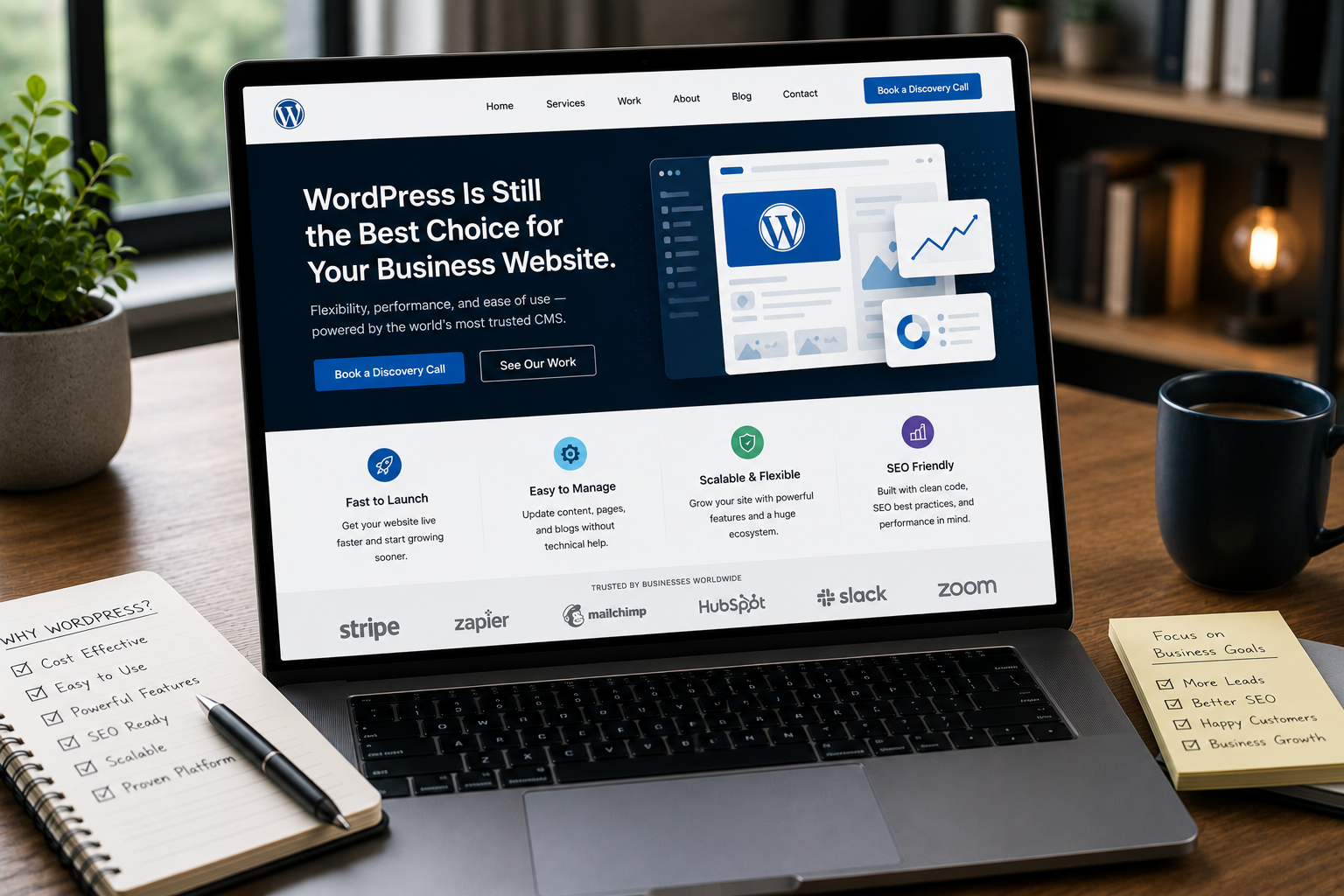
Is custom code always better? For most service businesses and content-driven brands, WordPress provides a smarter, faster, and more manageable foundation that scales with growth.
Compare custom WordPress themes, Elementor, and Gutenberg based on code quality, speed, and Total Cost of Ownership (TCO) to choose the optimal foundation for scalable growth and technical SEO.

Learn how to make a WordPress website feel fast, clean, and professional by improving themes, plugins, images, caching, hosting, and SEO.
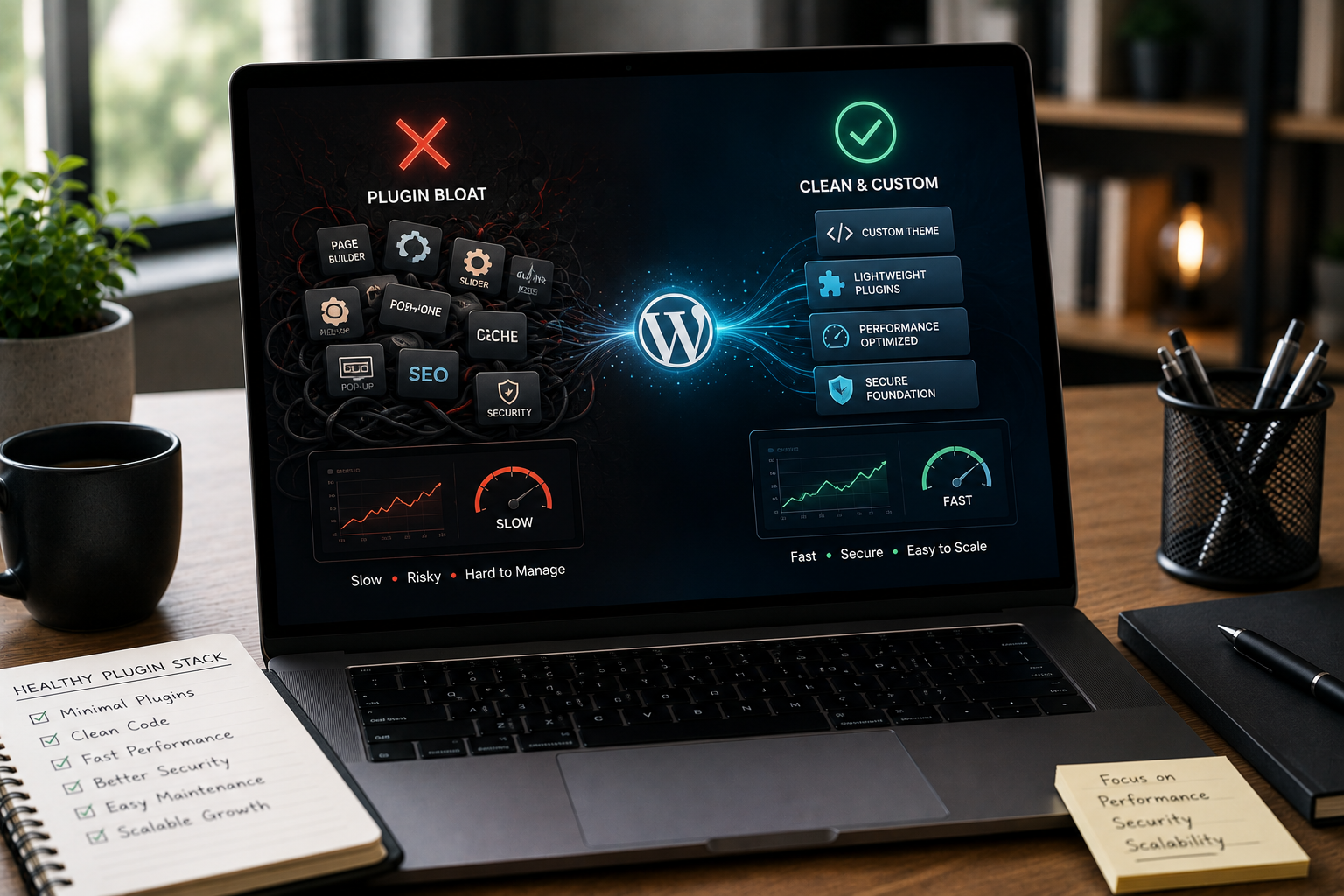
Which WordPress plugins are sabotaging your site's performance and security? Discover the essential strategies for building a faster, more reliable platform for your business.
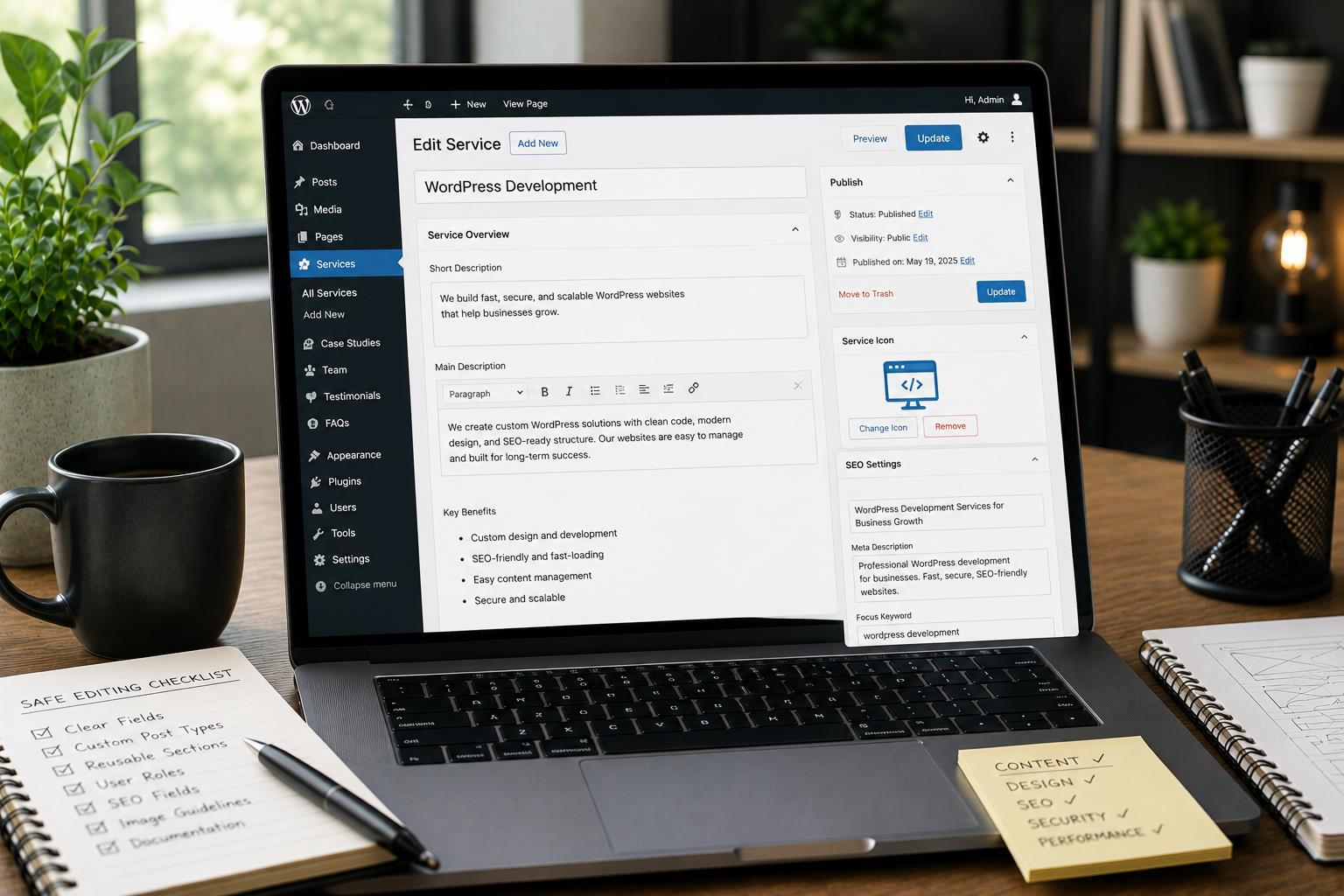
Learn how reusable sections, ACF fields, custom post types, roles, and clear CMS rules help clients edit WordPress content safely.

Checkout problems can silently reduce WooCommerce sales. Learn how friction, payment confusion, shipping issues, and trust gaps affect conversions.
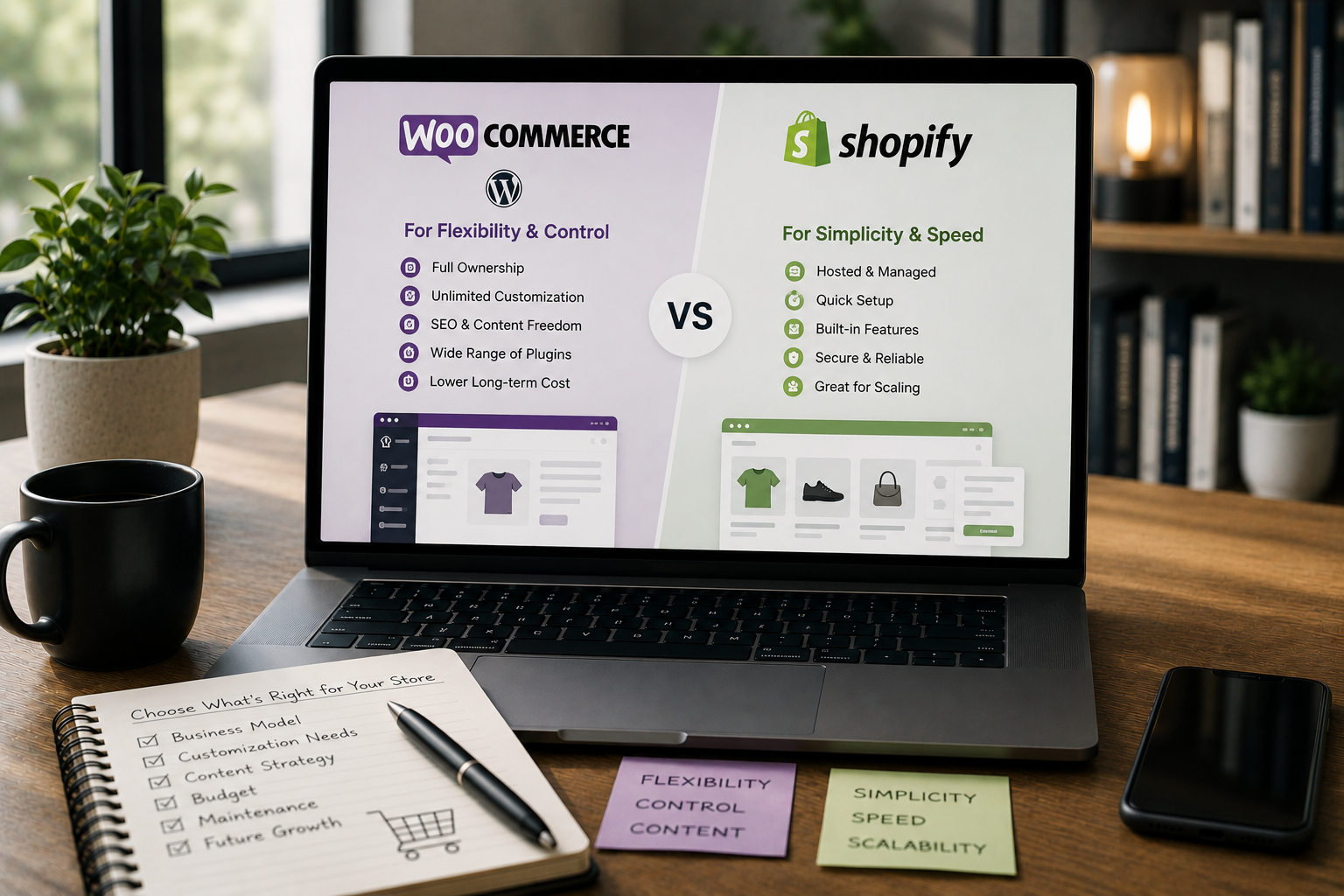
Compare WooCommerce and Shopify across ownership, flexibility, cost, maintenance, SEO, design control, and long-term ecommerce growth.

Learn how custom product pages, filters, checkout flow, branding, and UX decisions help a WooCommerce store feel unique and trustworthy.

Plan the WooCommerce features store owners often miss, from inventory and coupons to shipping, taxes, emails, reports, and SEO setup.
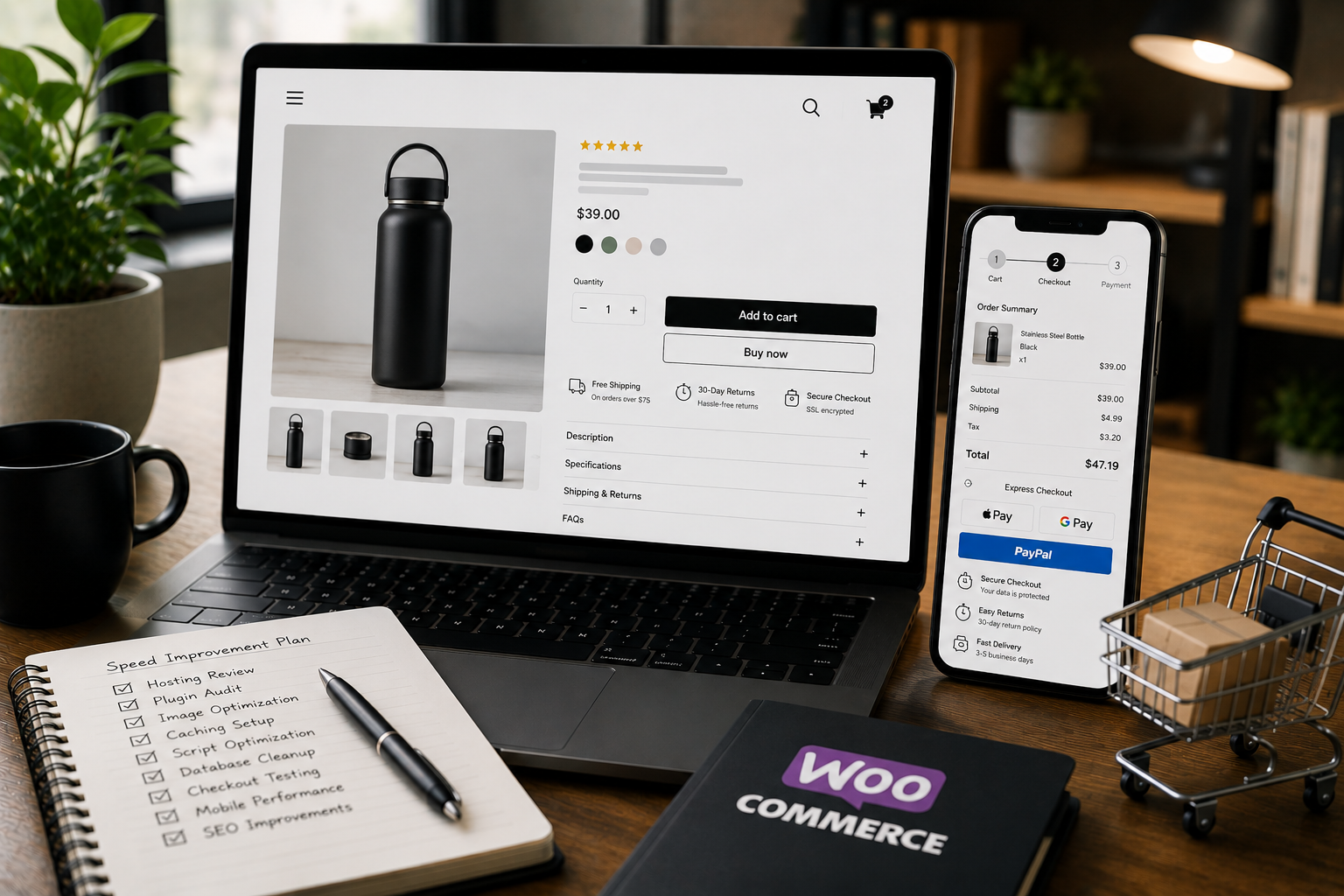
Learn how to improve a slow WooCommerce store before redesigning it by checking hosting, plugins, images, checkout, caching, and SEO basics.

Learn where Shopify customization gets difficult, from themes and apps to custom sections, checkout limits, SEO, and long-term store growth.
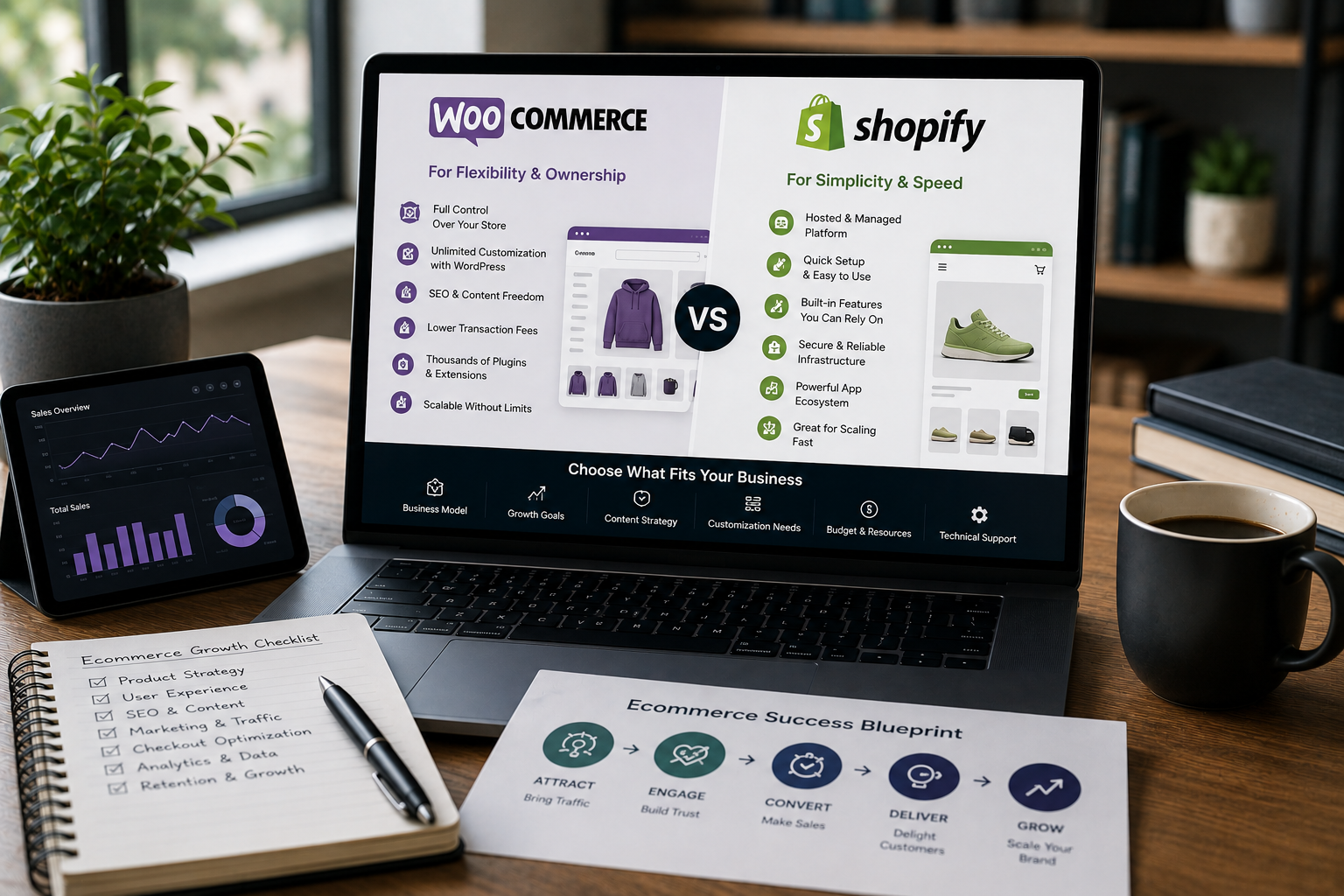
Compare Shopify and WooCommerce for growing ecommerce brands across setup, ownership, SEO, checkout, customization, apps, and maintenance.

Learn how to make a Shopify store feel premium with better design, product pages, theme sections, performance, and fewer unnecessary apps.

Learn which Shopify product page mistakes make stores look untrustworthy and how to improve images, copy, reviews, shipping, CTAs, and UX.

Learn when Shopify apps are enough and when custom development is better for workflows, performance, design control, checkout, SEO, and growth.

Learn why Next.js is a strong choice for modern business websites and web apps that need SEO control, performance, routing, and scalability.
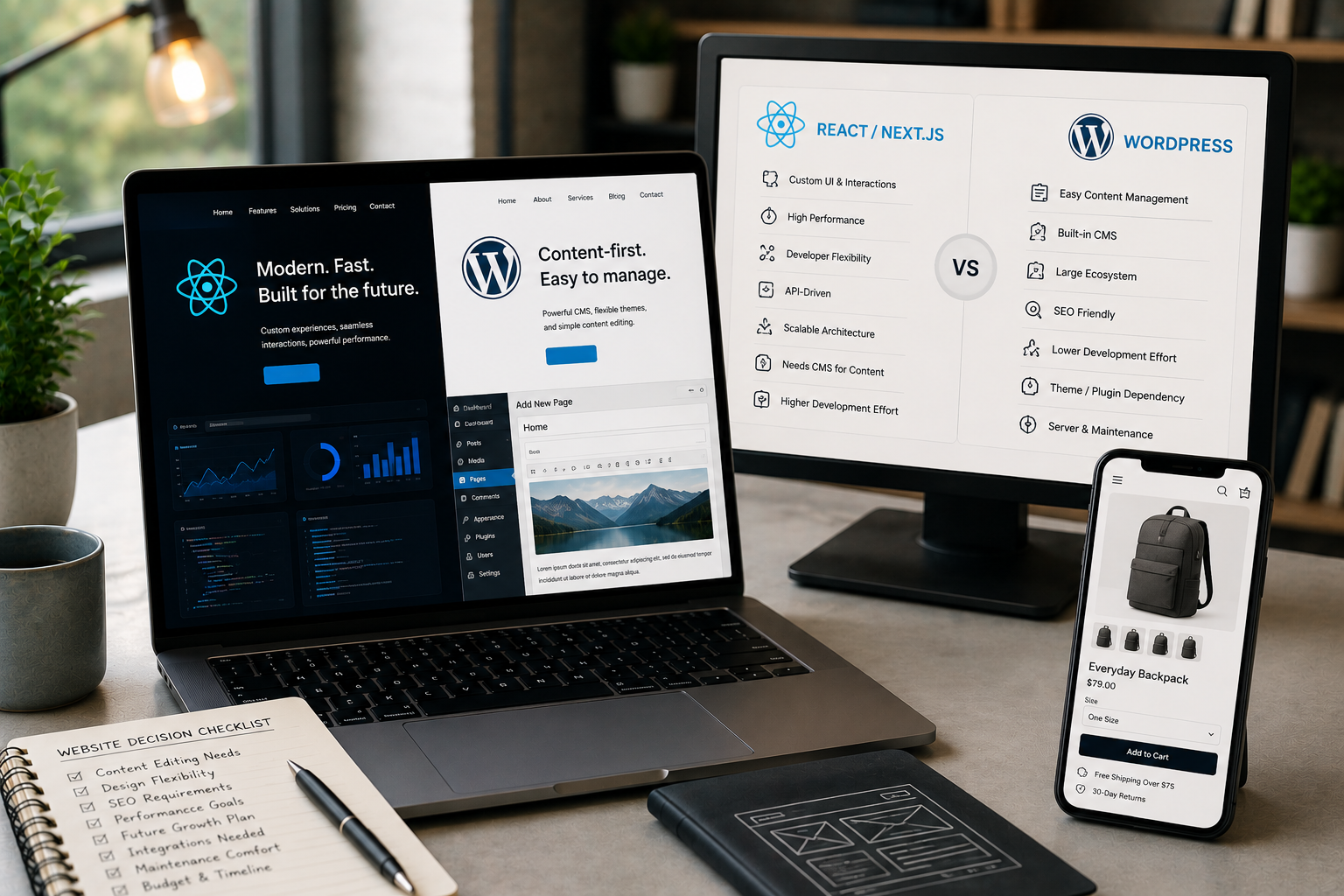
Compare React and WordPress websites across editing, speed, flexibility, SEO, budget, maintenance, and the type of website your business needs.
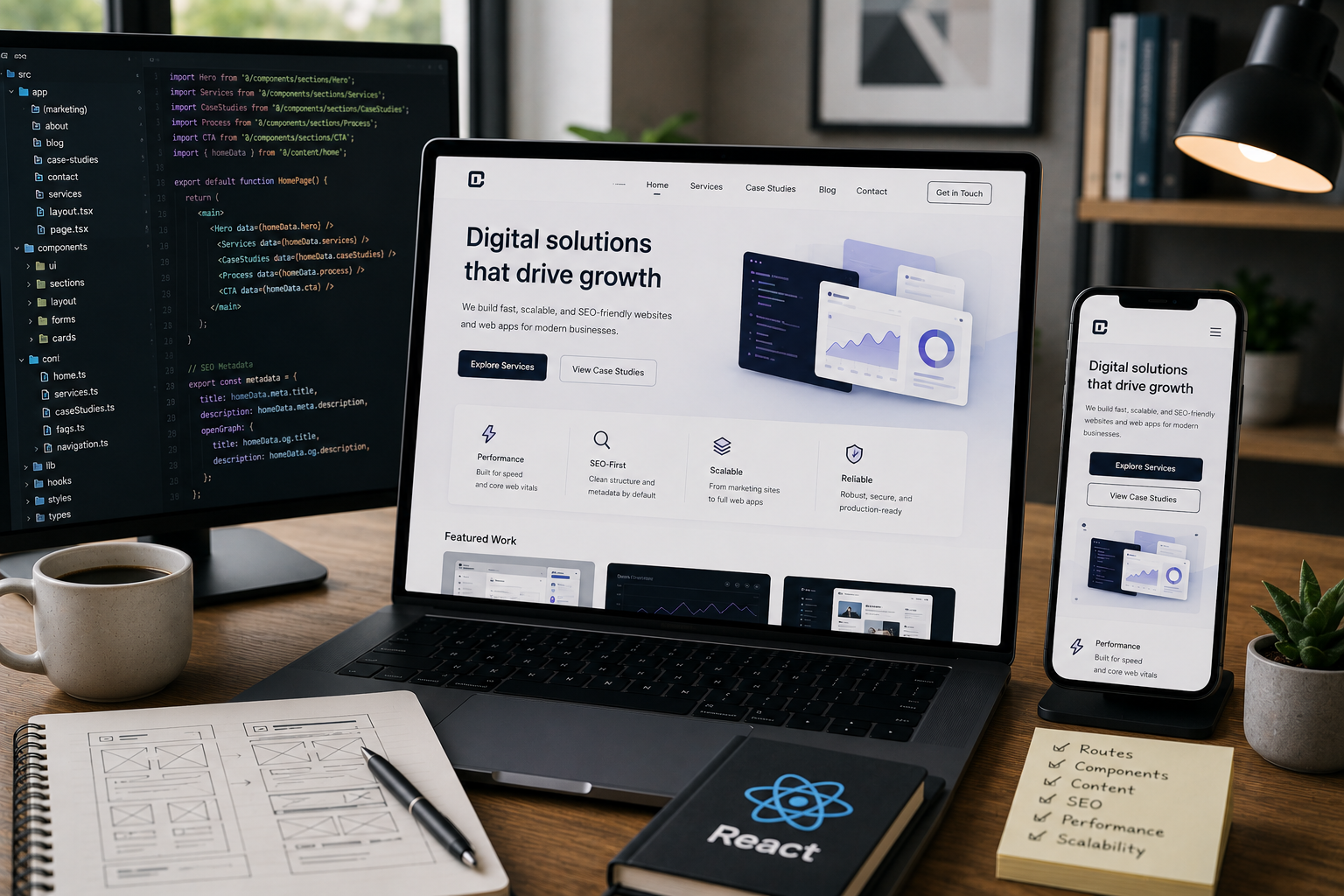
Learn a practical React frontend architecture for cleaner components, reusable UI, content files, routes, sections, SEO, and scalable apps.

Learn how to build a portfolio website that feels like a product with better UX, case studies, service pages, structure, SEO, and React design.

Learn the React UI mistakes that make websites feel unfinished, including spacing, hierarchy, responsiveness, states, motion, forms, and polish.

Case studies
See how this same frontend, backend, SEO, automation, and systems thinking shows up in real client project work.
Multi-Brand Business Operations
A reusable frontend foundation reduced repeated build work while keeping each brand experience flexible.


Finance & Billing Software
A connected billing platform made finance activity easier to track, review, and manage.
View Case Study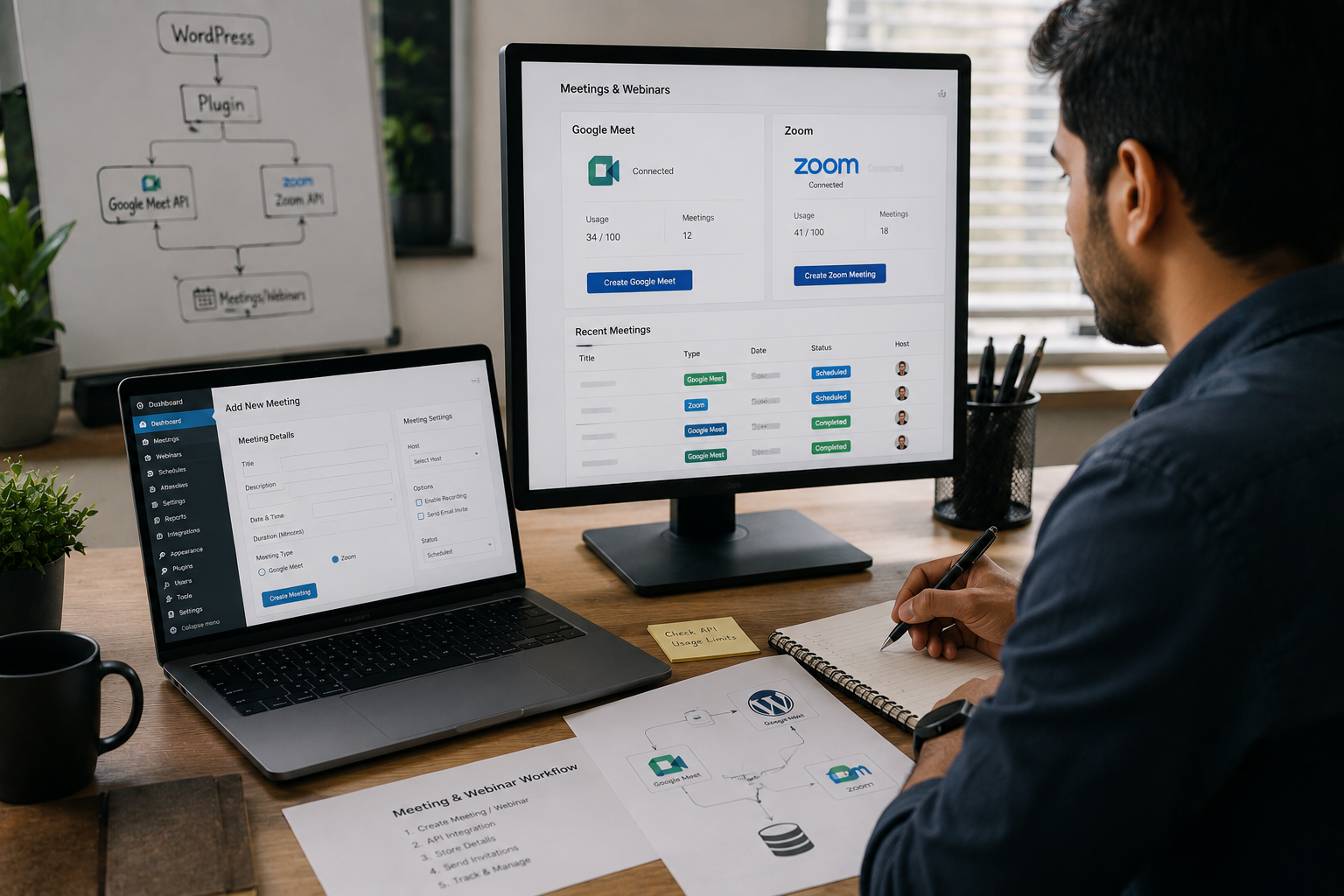
Online Education & Events
A custom plugin reduced repeated meeting setup and gave the team a cleaner webinar workflow.
View Case Study
SEO & Content Intelligence
A focused ML workflow made keyword opportunities easier to compare and act on.
View Case Study