Article
Design a conversion-focused homepage structure that builds immediate trust and clearly guides visitors from curiosity to a definitive action.
Discover the essential sections—from the Hero to the final CTA—that maximize conversions on a service business homepage and establish instant authority and clarity.
Homepage Sections Every Service Business Website Actually Needs
Every service business, from a specialized development consultancy to an ecommerce brand or a SaaS team, relies on its homepage to do one thing: convert a curious visitor into a qualified lead. Your website isn't a passive online brochure; it’s your most powerful, always-on sales asset. Yet, many homepages fail not because of poor aesthetics, but because of a flawed structural flow. They might look modern, but they fail to guide the user from simple awareness to definitive action. A high-converting homepage must follow a predictable, psychological sequence. It needs to establish immediate clarity, build non-negotiable trust, introduce the solutions (your services), prove the value, and systematically funnel the visitor toward a definitive next step. When this structure is optimized, the homepage shifts from being a liability to a reliable engine for client acquisition. This guide breaks down the seven non-negotiable sections required for a service business website homepage that is optimized for both user experience (UX) and the technical foundation of SEO Engineering & Technical SEO. By implementing this proven structure, you transform your website from a passive digital presence into an active, conversion-focused business tool.
1. The Intent-Driven Hero Section: Clarity Over Ambiguity
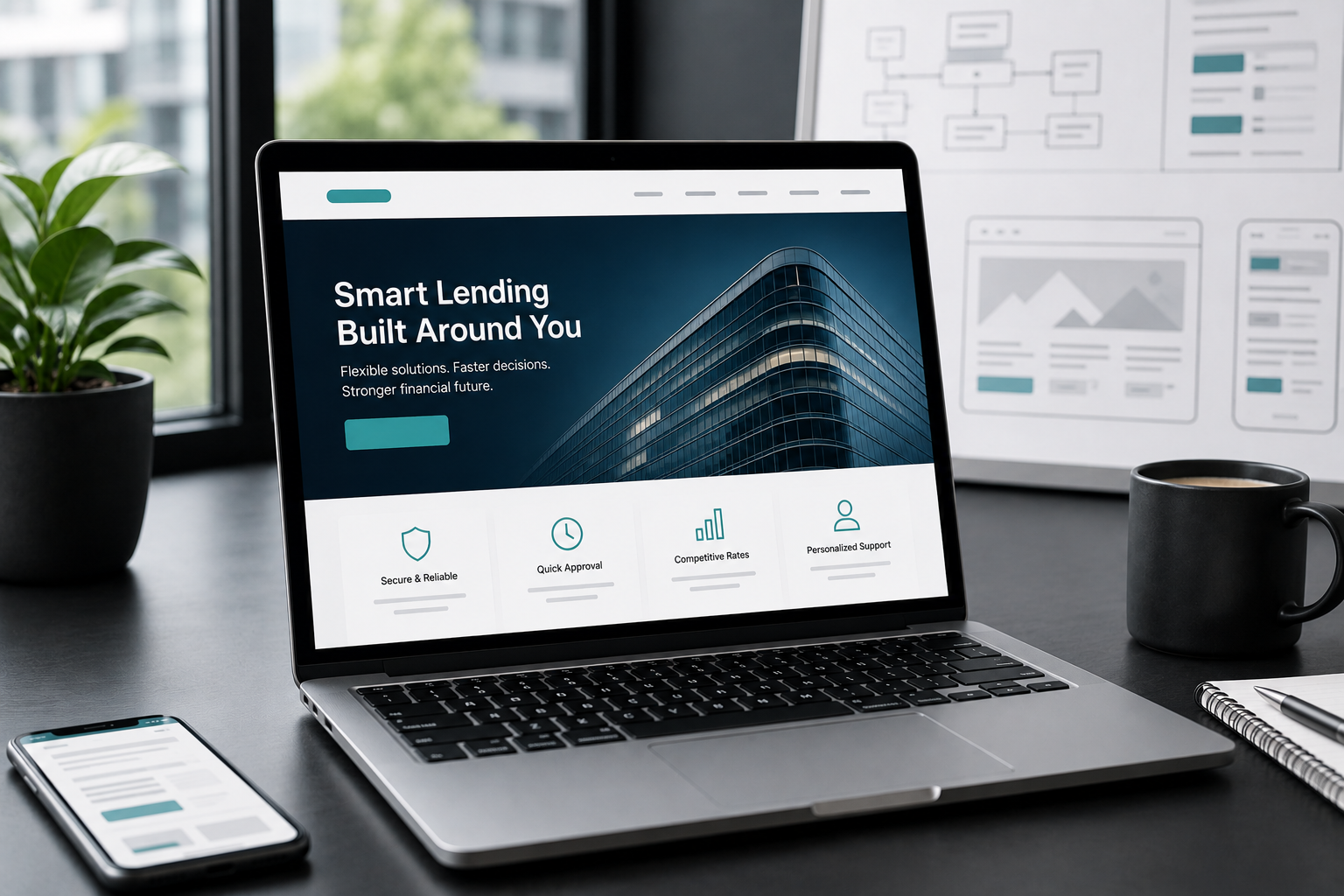
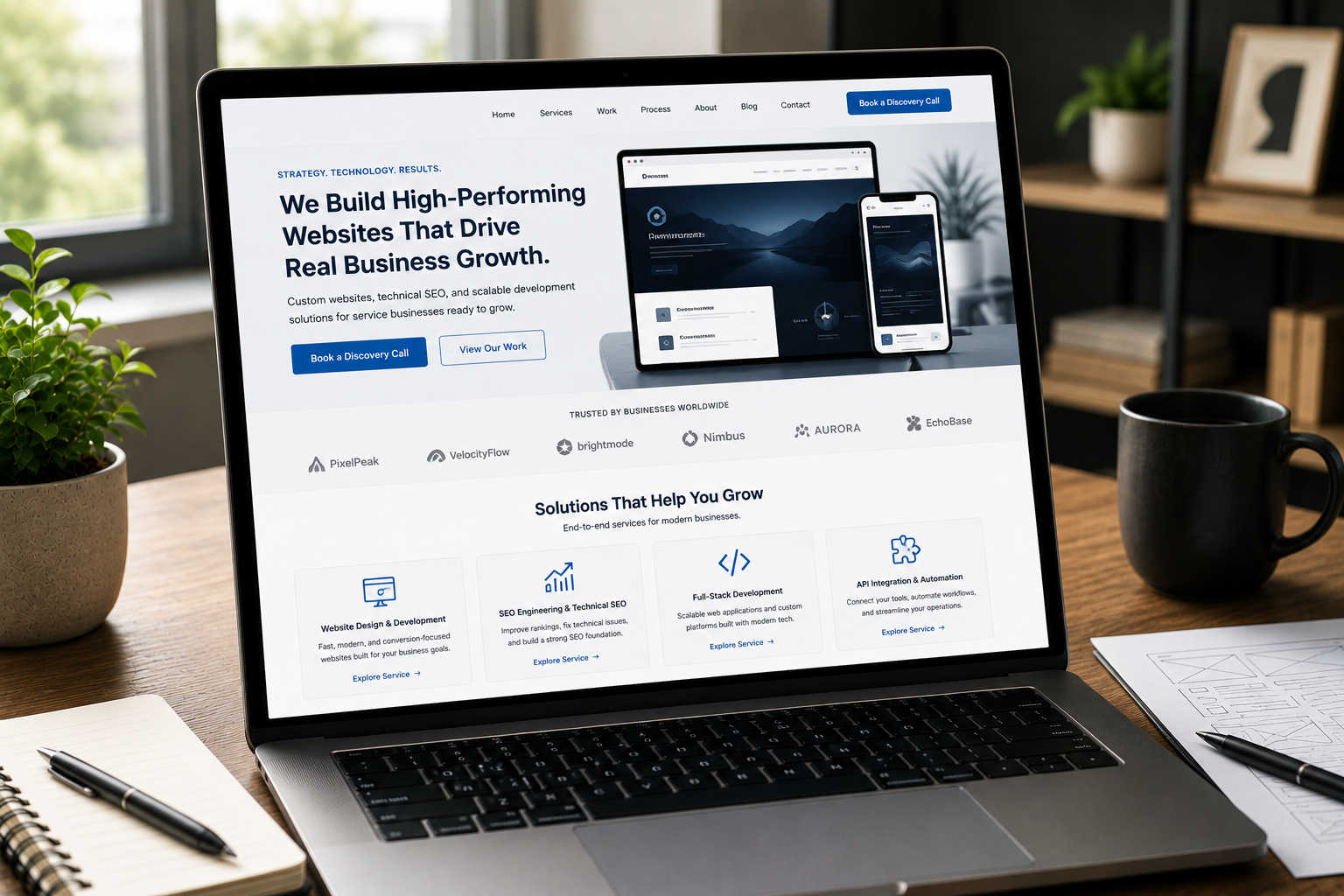
The Hero section is the virtual front door of your business. It is the single most valuable piece of digital real estate you own, and studies show you have less than three seconds to communicate your core value proposition before a visitor decides to stay or leave. Your primary goal here must be relentless clarity, not creative ambiguity.
The 'What, Who, and Why' Rule
A successful Hero section must immediately and unequivocally answer three questions for the visitor:
- What do you do? (Your core service)
- Who do you do it for? (Your specific target audience)
- Why should I choose you? (The core benefit or measurable outcome) The main headline should be designated as your H1 tag—the highest-priority signal for both search engines and human readers. This H1 must clearly state your core offering, targeting your primary broad service keywords. The sub-headline then provides the critical context and outcome, directly addressing the pain point or the high-value business_goals of your target audience. Example Scenarios for Clarity: | Vague & Generic Headline | Clear, Intent-Driven Headline (H1) | Sub-headline (The Outcome) | | --- | --- | --- | | Digital Marketing Agency for Growth | SEO Engineering & Technical SEO for SaaS Teams. | We fix slow site architecture and structure data for higher ranking authority, ensuring your platform scales without technical debt. | | We Build Great Websites | Full-Stack Development for Ecommerce Brands. | Deliver flawless mobile experiences with scalable React / Next.js Development that drives transactions and simplifies inventory management. |
The Single Primary Call-to-Action (CTA)
The Hero section must contain one, and only one, primary Call-to-Action button. This is your most desired outcome for the visitor. If you offer Website Design & Development, the CTA should not be a generic "Learn More," which forces more work on the user. It should be specific, high-value, and action-oriented. CTA Best Practices in the Hero:
- Avoid: 'Submit,' 'Learn More,' 'Contact Us'
- Use: 'Book a Discovery Call,' 'Start Your Technical Audit,' 'Get a Custom Proposal' Avoid the temptation to include secondary, diluting options like "See Our Portfolio" or "Read Our Blog" in the hero area. These introduce unnecessary decision paralysis and scatter the focus away from your main conversion goal.
Technical Note: The H1 Tag and Above-the-Fold Speed
From a pure SEO Engineering & Technical SEO perspective, the Hero section is the most critical element for page performance and on-page signals.
- H1 Compliance: The H1 tag must be semantically correct, unique, and directly reflective of the page's primary topic. Search engines read this first to contextualize the entire page’s relevance.
- Core Web Vitals: Everything visible 'above the fold' (before scrolling) must load almost instantly. If your primary hero image or video background is excessively large, or if render-blocking scripts are loading here, it will negatively impact your Core Web Vitals score. Prioritize performance by optimizing all visible assets and leveraging lazy loading for content further down the page.
2. Immediate Trust and Social Proof: Building Authority Fast
After a visitor understands what you offer in the Hero section, their immediate, subconscious question is: Can I trust this service provider? Service businesses have a higher barrier to clear regarding trust than product businesses. You must address this skepticism instantly, usually within the next section, before they begin to evaluate your specific service descriptions. This section, placed directly below the Hero, acts as an authoritative validator.
Logos and Authority Badges: Instant Credibility
If you have successfully completed work for notable clients, partners, or possess industry certifications, this is where you showcase them. A simple, horizontally stacked display of past client logos or partner badges functions as an instant trust signal. The implied message is clear: "These credible entities trusted us, meaning we are a safe, professional choice." Prioritization Checklist for Trust Signals:
- Client Logos: Use only recognizable or established business logos. Focus on quality over quantity.
- Certifications: Showcase official partner badges for platforms like WordPress, Shopify, or Next.js, or any relevant professional certifications.
- Press/Media Mentions: Use small, tasteful logos of major industry publications where your work or expertise has been featured.
The 'Micro-Testimonial' Section
While full case studies live on a dedicated page, the homepage requires concentrated bursts of social proof—what we call micro-testimonials. Select two to three highly specific quotes that validate the core outcome of your services, not just that the client was 'happy.' These quotes should prove you solved a tangible problem or helped the client achieve a major business_goals like improved efficiency or a seamless platform migration. The Anatomy of a Strong Micro-Testimonial:
- Specificity: It highlights a specific problem you solved.
- Credibility: Includes the client’s name, title, and company (if permissible).
- Outcome: Focuses on the positive result (e.g., "The custom dashboard we received cut our reporting time by 75%"). Decision Point: Third-Party Validation vs. Text Quotes If you utilize third-party review platforms (like Clutch, Google Business Profile, etc.), displaying a live, aggregated star-rating or linking directly to these reviews adds an unparalleled layer of transparency. Third-party validation is always stronger than text-only quotes because it is inherently less filtered.
3. The Service Overview Hierarchy: Guiding Intentional Visitors
Once trust is established, the visitor wants to confirm that their specific problem is addressed by your expertise. The Service Overview section is not a detailed sales pitch, but a structured, high-level gateway that quickly categorizes your offerings and guides the user deeper into the site.
Summarizing Your Offerings: The 3-to-5 Service Rule
Focus on presenting your core, most profitable, or most in-demand service categories—the top three to five ways you help clients (e.g., Website Design & Development, SEO Engineering & Technical SEO, React / Next.js Development). Each service block should include:
- A compelling H3 heading.
- A concise, benefit-driven description (2-3 sentences).
- A direct, specific link to the dedicated, deep-dive service page. This section must prioritize scannability. Founders, business owners, and SaaS teams are time-constrained; they should be able to scan this section and click through to the relevant page within moments. Avoid dense paragraphs; use bullet points when possible.
The Internal Link Structure: SEO-Friendly Navigation
This section is vital for your site’s internal SEO authority and is a core component of SEO Engineering. By linking from your high-authority homepage to your deep service pages, you signal to search engines the importance and relevance of those specific, long-tail offerings. This deliberate internal linking strengthens the overall site architecture. Internal Linking Checklist:
- H3 Optimization: The H3 heading for each service must use a relevant, targeted service keyword (e.g., "Technical SEO Audits for Site Migrations" instead of "SEO Services").
- Anchor Text: The link text must be descriptive and keyword-rich (e.g., "[Explore our Full-Stack Development Services]" instead of "[Click Here to Continue]").
- Code Performance: Regardless of whether you are leveraging a robust WordPress setup or a decoupled architecture built with Next.js, ensure this section loads efficiently to maintain a fast user experience.
Content Strategy: Addressing the Visitor's Problem First
The description within each service block should not focus on the features of the service (e.g., "We use PHP and JavaScript"). Instead, it should focus on the problem_statements and the solution_patterns (e.g., "We eliminate reliance on outdated frameworks to reduce your long-term maintenance costs and improve site speed"). Always articulate the solution in terms of the client's gain.
4. Show, Don't Tell: Case Studies and Project Highlights
For any service business, the most persuasive piece of content is concrete proof that you can deliver reliable, real-world results. This section serves to transition the visitor from understanding what you offer to seeing how you’ve successfully executed it for others.
From 'Portfolio' to 'Result': The Case Study Shift
Instead of merely showcasing aesthetically pleasing designs in a general "portfolio," structure this section as "Case Studies" or "Success Stories." A founder cares less about the visual design of a website and more about the improved conversion rate, the successful technical migration, or the enhanced user adoption you facilitated. Your focus must be on quantifiable or clearly articulated outcomes. Feature one to three compelling mini-case studies that highlight different types of success, showcasing the breadth of your capabilities—for example, one project on Website Design & Development and a second on API Integration & Automation.
Structuring the Mini-Case Study: Challenge, Solution, Outcome
Each project highlight presented on the homepage should be a highly condensed summary. This format allows users to quickly scan for relevant experience that mirrors their own problem_statements.
- The Challenge (The Pain Point): Briefly state the problem the client faced (e.g., "An outdated, monolithic CMS was causing slow deployment and high developer overhead").
- The Solution (Your Expertise): Briefly mention the service or technical approach applied (e.g., "Rebuilt the front end using React and implemented a custom CMS structure").
- The Outcome (The Result): State the measurable or significant result (e.g., "Page load times improved by 55%, and content publishing frequency doubled due to ease of use").
- Action Link: A clear, secondary CTA leading to the full, detailed case study page.
Technical SEO for Case Study Summaries
For SEO Engineering, ensuring that the case study summary is loaded as clean HTML (not embedded inside an unoptimized slider) is critical for indexability. Use descriptive alt tags if images are used, and ensure the surrounding text uses variations of your core service keywords alongside terms like client success or project outcome. This reinforces your authority for solution-oriented searches.
5. The Process and Value Proposition Differentiator
Many service homepages make the mistake of jumping directly from services to a contact form. This skips the critical step of managing client expectations and addressing the 'fear of commitment' they inevitably feel. This dedicated section explains how you work, what to expect, and why your approach is superior.
Mapping the Client Journey: Reducing Commitment Anxiety
Detail your client onboarding or service process in three to five simple, digestible steps (e.g., Discovery → Strategy → Build → Launch → Support). A clear process acts as a transparent roadmap, significantly reducing client anxiety by showing them exactly what happens after they click the CTA button. This transparency, which is a key component of the solution_patterns you offer, is a major trust builder. Essential Process Steps to Communicate:
- Deep Discovery: Focusing on understanding their specific business_goals and technical limitations.
- Conversion Strategy: Building the design and content architecture for optimal lead generation.
- Technical Implementation: Custom development utilizing the right stack (WordPress, React, etc.) for performance and scalability.
- SEO-Ready Launch: A launch that includes a final Technical SEO Audit and performance testing.
- Post-Launch Support: What they can expect for ongoing maintenance or optimizations.
The 'Why Choose Us' Section That Isn't Generic
Avoid meaningless filler phrases like "We are passionate" or "We offer tailored solutions." Instead, anchor your value proposition in technical reality and practical client benefits. Your differentiators should directly counter the common problem_statements your audience faces:
- Focus on Maintainability: "We build with clean, admin-friendly CMS architecture, eliminating technical debt and reducing your reliance on us for simple content updates."
- Focus on Performance: "We prioritize performance at the code level, not just the design, ensuring a high-scoring website ready for Google's Core Web Vitals requirements."
- Focus on Integration: "We excel at API Integration & Automation to ensure your new website is a seamless part of your existing tech ecosystem, not a silo."
Technical Integrity as a Value Proposition
For services involving development, technical integrity should be a core selling point. Clients are often frustrated by developers who deliver slow, bloated, or unmanageable code. Highlight that your Website Design & Development process includes:
- Code Review Standards: Commitment to modern development standards (e.g., using headless CMS with Next.js for speed, or clean WordPress code).
- Security Focus: Building with security best practices from day one.
- Scalability: Designing the platform to handle future growth in traffic or service offerings without requiring an immediate, expensive rebuild.
6. Strategic Call-to-Action Funneling
A homepage is, by definition, a sales funnel, and the CTA should be treated as the narrowest point of that funnel. You need to provide clear, strategically placed opportunities to capture visitors who are ready to buy now and those who need more time or information. This requires strategic placement of multiple, but distinct, CTAs.
The Mid-Page Secondary CTA
After the visitor has consumed the Hero, Proof, and Service Overview, a significant portion of the audience is ready to take the next step. This is the ideal spot for a secondary CTA block. It should be visually distinct from the main content, reiterate the core benefit, and offer a slightly softer commitment than the Hero CTA. Placement Recommendation: Place a clear, well-designed button immediately following the Case Studies or Process section. Use benefit-driven text like: "See How Our Process Can Work for Your Next Project" or "Download Our Project Planning Guide."
The Final, Full-Form CTA Block
The final CTA block, placed just before the footer or FAQ section, is designed for the user who has consumed nearly all the content and is fully convinced of your value. This block should be the most visually prominent and urgent CTA on the entire page (excluding the sticky header). Core Requirements for the Final Block:
- Reiterate Value: Briefly, in one sentence, restate the ultimate business_goals you help achieve (e.g., "Ready to build a website that delivers predictable leads?").
- Clear Action: Use the exact same, specific, high-value CTA text from the Hero section (e.g., "Book Your Discovery Call"). Consistency reinforces the intended action.
- Secondary Lead Capture: A small, short-form lead capture box (e.g., just for an email address to receive a checklist) can capture users who are still in the research phase but want to stay connected.
Technical Tip: Ensuring Mobile CTA Stickiness
Given that Website Design & Development must be mobile-first, your primary CTA should often be a "sticky" element—a fixed button that remains visible as the user scrolls down the page on a mobile device. This constant availability ensures that the visitor can convert the moment they reach their decision point, addressing a crucial difficulty_signals of poor mobile conversion design.
7. Preemptive Problem-Solving: The Essential FAQ Section
The Frequently Asked Questions (FAQ) section is often treated as a mandatory footer element, but it is one of the most powerful conversion and SEO Engineering tools on the homepage. Its purpose is twofold: to clear final conversion hurdles and to provide structured content for search visibility.
How FAQs Clear Conversion Hurdles
An FAQ section addresses common difficulty_signals and pre-emptive objections the user might have before they initiate contact. By resolving these concerns on the homepage, you reduce the friction in the final step of the funnel and increase the quality of the leads you receive. Common Objections to Address on the Homepage:
- Timeline: "How long does a typical Website Design & Development project take?"
- Ideal Client Fit: "Do you work with startups, or only established corporations?"
- Maintenance: "What happens if I need a small change after launch?"
- Technical Objections: "Can you integrate with our existing ERP/CRM system?" By answering these questions directly on the homepage, you ensure that the visitors who proceed to the main CTA are highly qualified and have already been successfully moved past their most common blockers.
Structuring FAQs for Search Visibility
From an SEO Engineering perspective, FAQs are invaluable. When structured correctly using the appropriate JSON-LD schema (FAQPage schema), they signal to search engines that your content is structured to answer specific user questions. This dramatically increases your page's chance of earning "Featured Snippets" or rich results in the Search Engine Results Pages (SERPs), boosting visibility and click-through rates. Implementation Guide:
- Clarity and Conciseness: Use clear question-and-answer pairs based on real client conversations.
- Keyword Integration: Ensure the answers are authoritative and naturally include relevant secondary keywords.
- Schema Markup: Confirm that the underlying code implements the correct schema to gain maximum search benefit.
Conclusion: Engineering Your Homepage for Conversion
The effectiveness of your service business homepage is determined not by how many features you include, but by the strategic, logical flow of its core sections. A successful homepage is a calculated sequence that builds clarity, delivers instant trust, articulates value, provides verifiable proof, and expertly funnels the user toward a specific, high-value action. If your current homepage is failing to meet your core business_goals—whether it's generating qualified leads or establishing clear professional authority—the problem is structural and foundational. Implementing this framework, from the H1-optimized Hero to the technically sound FAQ, ensures your website performs its critical job as your most valuable business tool. This level of conversion-focused structural and technical planning is the foundation of high-performance Website Design & Development.
Ready to Engineer a High-Converting Homepage?
Your service website deserves a homepage that works as strategically and tirelessly as you do. If you need assistance in planning the structure, refining conversion-focused content architecture, or implementing the technical foundation necessary for superior performance and SEO, explore our expertise in Website Design & Development. Let's transform your current homepage into an optimized, lead-generating machine.